Showing posts with label Images. Show all posts

Thursday, June 16, 2016

Be A Martian!

Mars Explorers Wanted“ title=
Mars needs YOU! In the future, Mars will need all kinds of explorers, farmers, surveyors, teachers… but most of all YOU! Join us on the Journey to Mars as we explore with robots and send humans there one day. Download a Mars poster that speaks to you. Be an explorer!

Mars Explorers Wanted“ title=

Explorers Wanted on the Journey to Mars

Hike the solar system's largest canyon, Valles Marineris on Mars, where you can catch blue sunsets in the twilight, and see the two moons of Mars (Phobos and Deimos) in the night sky.

Mars Explorers Wanted“ title=

Work the Night Shift on Martian Moon Phobos

Night owls welcome! If you lived on Mars' moon Phobos, you'd have an office with a view, mining for resources with Mars in the night sky. Settlers below on Mars would see Phobos rise and set not once, but twice in one day!

Mars Explorers Wanted“ title=

Farmers Wanted for Survival on Mars

Got a green thumb? This one's for you! In space, you can grow tomatoes, lettuce, peas, and radishes just like you would find in your summer garden. New ways of growing fresh food will be needed to keep brave explorers alive.

Mars Explorers Wanted“ title=

Surveyors Wanted to Explore Mars and its Moons

Have you ever asked the question, what is out there? So have we! That curiosity leads us to explore new places like Mars and its moons, Phobos and Deimos. Just what lies beyond the next valley, canyon, crater, or hill is something we want to discover with rovers and with humans one day too.

Mars Explorers Wanted“ title=

Teach on Mars and its Moons

Learning is out of this world! Learning can take you places you've never dreamed of, including Mars and its two moons, Phobos and Deimos. No matter where we live, we can always learn something new, especially with teacher-heroes who guide us on our path, daring us to dream and grow!

Mars Explorers Wanted“ title=

Technicians Wanted to Engineer our Future on Mars

People with special talents will always be in demand for our Journey To Mars. Whether repairing an antenna in the extreme environment of Mars, or setting up an outpost on the moon Phobos, having the skills and desire to dare mighty things is all you need.

Mars Explorers Wanted“ title=

Assembly Required to Build Our Future on Mars and its Moons

Are you someone who can put things together, solving challenges to ensure survival? Dare to forge our future with space-age tools - build spaceships to carry us to Mars and back, and habitats to protect us while we're there.

Mars Explorers Wanted“ title=

We Need You

We need many things for our Journey To Mars,
but one key piece is YOU!

Check out the feature at NASA Mars Exploration.

Will we actually see the colonization of Mars in our lifetime?

If human exploration and colonization of Mars is a subject that interests you, I highly recommend Kim Stanley Robinson's Mars Trilogy - consisting of Red Mars, Green Mars, and Blue Mars. In this awesome work of science fiction, Robinson delves into the technological, social and political aspects in a realistic future of Martian colonization and terraforming. You'll find no light-sabres or warp drives in these books... just down-to-earth, scientifically-feasible sci-fi!!!

Kim Stanley Robinson's Mars Trilogy

Monday, June 06, 2016

D-Day - June 6, 1944

“Sainte

“Sainte

“Sainte

SAINTE MERE EGLISE, France -- It was the middle of the night and the town of Sainte Mere Eglise was on fire. Occupied by the Germans since June 18, 1940, the town had survived several allied air raids.

A stray incendiary bomb from one of those raids had set a building near the town square on fire and it was spreading. The townspeople formed a chain to ferry water from the pump in the town square to the fire.

At about 1:30 a.m. that day -- June 6, 1944 -- the sky filled with hundreds of American paratroopers from the 82nd Airborne Division. Well lit by the flames beneath them, the paratroopers were easy targets for the startled German soldiers on the ground. One of those paratroopers was Pvt. John Steele of F Company, 3rd Battalion, 505th Parachute Infantry Regiment. Steele was already a combat veteran, with combat jumps into Italy and Sicily under his belt prior to D-Day.

During his landing, Steele's parachute became caught in the steeple of the church in the middle of the town square. Shot through the foot, Steele hung there for two hours pretending to be dead before the Germans noticed him and cut him down.

"There were some paratroopers who landed nearby, but they didn't help him because they thought he was dead. The Germans thought he was dead also, but they wanted whatever papers he had on him and that is when they discovered that he was alive," said Patrick Bunel, a curator at the Airborne Museum here.

The German soldiers took him prisoner, but Steele was able to escape once tanks that had landed at Utah beach arrived. At approximately 4:30 a.m. Sainte Mere Eglise became the first town in France to be liberated. The fighting around the town continued until June 7, when the Germans were finally pushed back. Steele was awarded the Bronze Star for valor and the Purple Heart for his actions during the invasion.

Today a uniformed mannequin hangs from a parachute and rigging on the steeple, in honor of Steele (who actually landed in back of the church), his fateful jump and the liberation of the town below.

"When I first saw it (the mannequin), I didn't know that it had actually happened," said Pfc. Cory Peppeard of the 230th Military Police Company, 18th Military Police Brigade, one of hundreds of U.S. servicemembers here to support this week's 65th anniversary commemoration of D-Day. "It's pretty impressive that he was able to survive that."

Sainte Mere Eglise secured Steele a place in history as a Soldier in the division that helped to liberate the town, but also as the paratrooper who landed on the church. It was a scene that would be recreated 18 years later in the 1962 movie, "The Longest Day," in which Steele was portrayed by the actor Red Buttons.

Steele regularly visited here before his death in 1969 from cancer. But he was not the only American the town remembers.

Their actions here have also been captured in two stained glass windows in the church. One was designed in 1945 by a local artist named Paul Renaud, who was 14 years old when the paratroopers landed and 16 years old when he drew the sketch for a window made by Gabriel Loire in the village of Chartres.

It depicts the Virgin Mary and child above a burning Sainte Mere Eglise with paratroopers and planes around her. An inscription below the figures reads: "This stained glass was completed with the participation of Paul Renaud and Sainte Mere, for the memory of those who, with their courage and sacrifice, liberated Sainte Mere Eglise and France".

"My father worked with the parish to come up with an idea to replace the original window, which had been destroyed," said Henri Jean Renaud, whose father was the mayor of Saint Mere Eglise at the time. Renaud was 10 years old when the paratroopers landed.

A second window depicts Saint Michael, the patron saint of paratroopers. The 82nd Airborne Division, the lion of Normandy, the Sainte Mere Eglise insignia, and symbols for each of the combat jumps made by the 82nd Airborne Division during World War II are also represented in the window.

The idea for the window began at the 25th anniversary of the jump and was donated by the veterans of the 505th Parachute Infantry Regiment, 82nd Airborne Division, in 1972. The same artist that made the first window also made the second. The inscription at the bottom reads: "To the memory of those who through their sacrifice liberated Sainte Mere Eglise."

While the mannequin and windows are but inanimate objects, Renaud said, they help keep the memory of very real heroes alive.

"We are really very devoted to the veterans," said Renaud. "For me, when they landed, they were like heroes in a movie. Now they are brothers."

Check out the article at The Official Home Page of the United States Army.

NEVER FORGET D-DAY!!!

Be sure to visit the National World War II Museum in New Orleans, Louisiana for some exciting events going on today!

If you are interested in accurate D-Day and WWII history, I highly recommend the following books by Stephen Ambrose. He has written other WWII books, but those four are by far the most notable and my favorites:

The HBO miniseries Band of Brothers, inspired by Stephen Ambrose's book by the same title, is a must-see for any WWII history buff. I have found the series to be one of the most historically accurate movies made on the topic... I highly recommend checking it out!

There are MANY movies made in the WWII setting, check out World War II on Film at www.worldwar-2.net and the Wikipedia List of WWII Films.

Friday, April 08, 2016

A Giant Landing for Mankind

SpaceX CRS-8 - A Giant Landing for Mankind“ title=

SpaceX CRS-8 - A Giant Landing for Mankind“ title=

SpaceX CRS-8 - A Giant Landing for Mankind“ title=

SpaceX CRS-8 - A Giant Landing for Mankind“ title=

SpaceX CRS-8 - A Giant Landing for Mankind“ title=

Why SpaceX's Rocket Landing On A Drone Ship Is A Big Deal


There couldn't have been a more perfect launch than yesterday's. The sun was shining, a gentle breeze was blowing, and SpaceX's Falcon 9 rocket took off right on schedule. As we watched from a few miles away, the glare of the rocket's flames was searingly bright, hard to look at but impossible to look away from, like the sparklers kids play with on the Fourth of July. The sound, too, was like Independence Day, the boom and shake of a thousand fireworks going off, crashing through the sound barrier.

The cargo made it safely into orbit, where it's on its way to the International Space Station. But the real magic was in what happened after the launch. For the first time ever, the Falcon 9 came down for a gentle (non-explosive) landing on a drone ship. The achievement is critical in developing reusable, relatively low-cost spaceflight.

“It's another step toward the stars,” said Musk during a press conference.

Traditionally, rocket boosters fall into the ocean after launch, never to be used again. But Musk often compares that to throwing away an airplane after every flight. Reusing the booster could shave millions of dollars off of launch costs, and the first step to that is getting the boosters back to Earth safely.

SpaceX landed its rocket on solid ground in December, but landing on the drone ship was key to SpaceX's reusability strategy.

That's because about half of all launches bring the rocket over the ocean. After that, the rocket doesn't have enough fuel to turn back around and head for land. The autonomous ship gives SpaceX a movable landing pad, but landing on it proved difficult. It's akin to a jet landing on an aircraft carrier—the target is small and moving—except that the rocket comes down at about 17,000 miles per hour.

Unlike the booster that landed on land last year SpaceX is planning to reuse this one. After the drone ship Of Course I Still Love You brings it back to port, the company will test fire the engines about 10 times, and if all is working well, they could fly it again as soon as May or June.

Eventually, the company hopes to “hose off”, tune up, and re-launch each rocket in a matter of weeks, Musk said. If they can do it on a reliable enough basis, it could shave millions of dollars off the cost of launching.

It costs about $60 million to build a rocket, but just 2 or 3 hundred thousand to refuel it. Inspecting and tweaking each booster could cost some time and money, but Musk says they're expecting reusability to bring costs down “100-fold”.

It should be noted that the space shuttle program had similar goals—it was hoped that reusing the vehicle and launching often would bring down costs over time. Unfortunately, the price stayed constant around $450 million per flight.

But SpaceX has already changed the face of spaceflight and ISS resupply with its $61.2 million dollar launches, compared to $225 million for its competitor ULA.

If reusability pans out as well as Musk hopes, a 100-fold decrease would bring the cost of each launch from roughly $60 million to about $600,000.

That figure isn't counting the cost of having to build new rockets—Musk estimates that each rocket could be good for 10 or 20 launches. But even if it's somewhere in that ballpark, such a dramatic price cut would revolutionize access to space, opening it up for business, research, and tourists. It would make the Falcon 9 into the Model T of space exploration.

There's still a lot that could go wrong before that happens.

By the end of this year, SpaceX intends to amp up its launch frequency to every other week, and most of those launches will be accompanied by landing attempts. So if the reusability plan really works to cut costs, we should know it sooner rather than later.

Check out the article at Popular Science.

Private industry is the way of the future in space!

Check out:


Of course, here is the video of the now-famous landing!


Friday, March 06, 2015

NASA Dawn Probe Enters Orbit Around Dwarf Planet Ceres

NASA Dawn Probe Enters Orbit Around Dwarf Planet Ceres - March 6, 2015

NASA Dawn Probe Enters Orbit Around Dwarf Planet Ceres - March 6, 2015

NASA Dawn Probe Enters Orbit Around Dwarf Planet Ceres - March 6, 2015

NASA Dawn Probe Enters Orbit Around Dwarf Planet Ceres - March 6, 2015

The year of the dwarf planet has begun.

NASA's Dawn probe arrived at Ceres today (March 6) at about 7:39 a.m. EST (1239 GMT), becoming the first spacecraft ever to orbit a dwarf planet. Dawn's observations over the next 16 months should lift the veil on Ceres, which has remained largely mysterious since it was first spotted more than two centuries ago.

"Since its discovery in 1801, Ceres was known as a planet, then an asteroid and later a dwarf planet," Dawn mission director and chief engineer Marc Rayman, who's based at NASA's Jet Propulsion Laboratory (JPL) in Pasadena, California, said in a statement. "Now, after a journey of 3.1 billion miles (4.9 billion kilometers) and 7.5 years, Dawn calls Ceres 'home.'"

NASA officials got a signal from Dawn confirming that it's healthy and in orbit at about 8:36 a.m. EST (1336 GMT) today.

The milestone comes just four months ahead of another highly anticipated dwarf-planet encounter: On July 14, NASA's New Horizons probe will zoom through the Pluto system, giving scientists their first good looks at that faraway dwarf planet and its five known moons.

Dawn of the solar system

The $473 million Dawn mission launched in September 2007 to study Vesta and Ceres, the two largest objects in the main asteroid belt between Mars and Jupiter. Vesta's diameter is 330 miles (530 km), while Ceres is about 590 miles (950 km) wide.

Both Vesta and Ceres are leftovers from the solar system's early days, planetary building blocks that would likely have kept growing if not for the interfering influence of Jupiter's immense gravitational tug.

The two bodies are "intact protoplanets from the very dawn of the solar system," Dawn Deputy Principal Investigator Carol Raymond, also of JPL, said during a news conference Monday (March 2)." So they're literally fossils that we can investigate to really understand the processes that were going on at that time."

Dawn orbited Vesta from July 2011 through September 2012, when the probe departed for Ceres. So today's arrival made history in another way as well: Dawn became the first spacecraft ever to orbit two objects beyond the Earth-moon system.

The mission's spaceflight feats are made possible by Dawn's innovative propulsion system, which accelerates xenon ions out the back of the spacecraft. This process generates tiny amounts of thrust; it would take Dawn four days to go from 0 to 60 mph (97 km/h), team members have said.

But Dawn's ion drive is about 10 times more efficient than traditional chemical systems. So the engines can keep firing for weeks, months and years, accelerating Dawn to tremendous speeds.

"With the 1,000 lbs. [454 kilograms] of xenon propellant that was loaded on board, Dawn has already accomplished more than 24,000 mph [38,624 km/h] of velocity change," Dawn project manager Robert Mase of JPL said during Monday's news conference. "To put that in context: That's more than it takes to get a vehicle from the surface of the Earth up to the International Space Station."

Thanks to ion propulsion, Dawn crept up on Ceres slowly and gradually. The probe eased into orbit today without the need for any harrowing make-or-break maneuvers.

The Mysteries of Ceres

Ceres is an intriguing world that in many ways looks more like the icy moons of the outer solar system, such as Jupiter's satellite Europa and the Saturn moon Enceladus, than its rocky neighbors in the asteroid belt.

For example, the dwarf planet is thought to consist of 25 to 30 percent water by mass, mostly in the form of ice. Ceres may also once have had (and might even still possess) an ocean of liquid water beneath its surface, as Europa and Enceladus are thought to. Indeed, some researchers believe Ceres may be capable of supporting microbial life.

"It's really going to be exciting to see what this exotic, alien world looks like," Rayman told Space.com in late January. "We're finally going to learn about this place."

Dawn is not equipped to search for signs of life. But the probe might be able to spot evidence of an underground ocean (if it exists), if it burbles up in places to interact with surface rocks, Rayman said. Measurements of Ceres' surface temperatures, when coupled with models of heat transportation through Ceres, could also shed light on the question of underground liquid water, said Dawn principal investigator Chris Russell of UCLA.

Dawn will also investigate two Ceres mysteries that have cropped up in the past year or so. Mission scientists will try to figure out just what is producing Ceres' mysterious bright spots, and they'll attempt to confirm and characterize a tenuous water-vapor plume spotted recently by researchers using Europe's Herschel Space Observatory.

Overall, Dawn will characterize the dwarf planet in detail, mapping out its surface and determining what Ceres is made of, among other tasks.

"We'll do typical planetary geology, more similar to what we do on Mars than what we did with Vesta," Russell told Space.com.

This work will not start immediately; Dawn will spend the next six weeks spiraling down to its initial science orbit, getting there on April 23. The probe will then begin taking Ceres' measure from an altitude of 8,400 miles (13,500 km). Dawn will study the dwarf planet from a series of increasingly closer-in orbits until the mission ends in June 2016.

Sizing up Dwarf Planets

While Ceres and Pluto are both dwarf planets — a category created by the International Astronomical Union (IAU) in 2006, when it demoted Pluto from a full-fledged planet in a decision that remains controversial today — they're quite different from each other, Russell said.

"Pluto formed differently, formed at a different time and formed out of different materials" than Ceres, he said.

Pluto is also more than twice as wide as Ceres and lies more than 14 times farther from the sun than the queen of the asteroid belt does. So the data returned by Dawn and New Horizons will likely not paint a unifying picture of just what it means to be a dwarf planet, Russell said.

"The legacy [of the two missions] is freeing these bodies from arbitrary labels based on their size or their ability to scatter other objects, or whatever the IAU had going through its head," he said. "These bodies are being liberated from classification, and we now can understand them in their own right."

Check out the article at Space.com.

I can't wait to see the new photos!!! Check out the live updates:

Friday, February 27, 2015

Live Long and Prosper!

Leonard Nimoy 1931-2015 - Live Long and Prosper!

Leonard Nimoy 1931-2015 - Live Long and Prosper!

Leonard Nimoy 1931-2015 - Live Long and Prosper!

Leonard Nimoy 1931-2015 - Live Long and Prosper!

StarTrek.com is deeply saddened to report the passing of Leonard Nimoy. The legend -- an actor, writer, producer, director, poet, host, voiceover artist, photographer, husband, father and grandfather, as well as Star Trek's beloved Spock -- died today at the age of 83 at his home in Los Angeles. Nimoy succumbed to the end stages of COPD (Chronic Obstructive Pulmonary Disease), an illness that resulted from years of smoking and which afflicted him despite having quit smoking three decades ago. In 2014, he announced via Twitter that he was battling COPD and urged fans to stop smoking before it was too late.

Nimoy's career spanned generations. Born and raised in Boston, he started acting as a boy, but moved to Los Angeles at age 18 to give it a go on a professional level. He worked his way up from small roles in the likes of Queen for a Day, Zombies of the Stratosphere and Them! to major guest star turns in such shows as Broken Arrow, Dragnet, Sea Hunt, Twilight Zone, Wagon Train and The Outer Limits. At one point, he acted in an episode of The Lieutenant, a show written and created by a rising behind-the-scenes talent named Gene Roddenberry, and he acted in an episode of The Man from U.N.C.L.E. with a young Canadian by the name of William Shatner.

It wouldn't be long before their lives intersected again. Roddenberry created Star Trek: The Original Series, tapping Nimoy to play Spock and Jeffrey Hunter to play Captain Pike. NBC rejected the pilot, but asked Roddenberry to try again. The second pilot once again featured Nimoy as Spock, but after Hunter opted out of his contract, Roddenberry hired Shatner to play Captain Kirk. DeForest Kelley, who'd turned down the role of Spock, came on board to portray Dr. McCoy, and that unforgettable trio -- complemented by Nichelle Nichols, James Doohan, George Takei and, starting with season two, Walter Koenig -- formed the cast that would see Star Trek through three seasons of the original show, 20-plus episodes of an animated series and six feature films, not to mention numerous television commercials and countless convention appearances.

Nimoy at times waged an internal battle when it came to Spock. He titled his first autobiography I Am Not Spock. Twenty years later, though, he wrote I Am Spock. He turned down the proposed Star Trek: Phase II series, but returned for Star Trek: The Motion Picture. Spock died in Star Trek II: The Wrath of Khan, only to be resurrected for Star Trek III: The Search for Spock, which Nimoy directed. He also directed Star Trek IV: The Voyage Home and produced and developed the story for Star Trek VI: The Undiscovered Country, and, as a tie-in, he guest starred as Ambassador Spock on two episodes of Star Trek: The Next Generation. And in 2009, after 18 long years, Nimoy helped J.J. Abrams reboot the Star Trek franchise by playing Spock Prime in Star Trek (2009), passing the torch to Zachary Quinto, who became a close friend. He also voiced Spock for Star Trek Online, made a cameo in Star Trek Into Darkness and was reportedly in talks to appear in the upcoming Star Trek film at the time of his death.

Beyond Star Trek, Nimoy's many film, TV and stage credits included Mission: Impossible, A Woman Called Golda, In Search Of..., Equus, Never Forget, Vincent, Standby: Lights! Camera! Action!, The Simpsons, Transformers: Dark of the Moon and Fringe. With his friend and TNG's Q, John de Lancie, he created Alien Voices, which staged and recorded radio play-style productions of classic and original sci-fi/fantasy stories. And yes, who could forget Nimoy's music pursuits, which included such tunes as "Proud Mary" and "The Legend of Bilbo Baggins"? Nimoy joined Twitter in 2010 and gave William Shatner a run for his money, tweeting more than 1,700 times and amassing more than one million followers.

He was also a friend to StarTrek.com, helping re-launch the site in 2010 with an opening statement, granting an extensive, career-spanning interview in 2011, contributing a guest blog in 2012 about his creation of the split-fingered Vulcan greeting, and checking in with us often over the years for interviews and with updates on his current projects, as well as to answer specific questions about Star Trek as they came up. He ended his emails to us as he did every tweet to the public, with the acronym LLAP... Live Long and Prosper.

Back in May 2012, StarTrek.com teased Nimoy about being the busiest retired man in history. Asked if he truly considered himself retired, Nimoy replied, "Yeah, I do. I am. Look, I liken myself to a steamship that's been going full-blast and the captain pulls that handle back and then says, 'Full stop,' but the ship doesn't stop. It keeps moving from inertia. It keeps moving. It keeps moving. It'll start slowing down, but it doesn't stop. It doesn't come to a dead stop. That's the way I am. I still have a few odds and ends things that I enjoy doing. I don't want to get up in the morning and have nothing to do that day. That would be boring." Perfectly logical, right? And in his final tweet, which he posted on Feb. 23, Nimoy wrote, "A life is like a garden. Perfect moments can be had, but not preserved, except in memory. LLAP."

Nimoy leaves behind his wife, Susan Bay, two children and several grandchildren. Please join StarTrek.com in offering our condolences to his family, friends, colleagues and millions of fans around the galaxy.

Check out the article at StarTrek.com.

R.I.P. Spock!

Thursday, February 26, 2015

Monster Black Hole is the Largest and Brightest Ever!

Monster Black Hole Is the Largest and Brightest Ever Found

Monster Black Hole Is the Largest and Brightest Ever Found

Astronomers have discovered the largest and most luminous black hole ever seen — an ancient monster with a mass about 12 billion times that of the sun — that dates back to when the universe was less than 1 billion years old.

It remains a mystery how black holes could have grown so huge in such a relatively brief time after the dawn of the universe, researchers say.

Supermassive black holes are thought to lurk in the hearts of most, if not all, large galaxies. The largest black holes found so far in the nearby universe have masses more than 10 billion times that of the sun. In comparison, the black hole at the center of the Milky Way is thought to have a mass only 4 million to 5 million times that of the sun.

Although not even light can escape the powerful gravitational pulls of black holes — hence, their name — black holes are often bright. That's because they're surrounded by features known as accretion disks, which are made up of gas and dust that heat up and give off light as it swirl into the black holes. Astronomers suspect that quasars, the brightest objects in the universe, contain supermassive black holes that release extraordinarily large amounts of light as they rip apart stars.

So far, astronomers have discovered 40 quasars — each with a black hole about 1 billion times the mass of the sun — dating back to when the universe was less than 1 billion years old. Now, scientists report the discovery of a supermassive black hole 12 billion times the mass of the sun about 12.8 billion light-years from Earth that dates back to when the universe was only about 875 million years old.

This black hole — technically known as SDSS J010013.02+280225.8, or J0100+2802 for short — is not only the most massive quasar ever seen in the early universe but also the most luminous. It is about 429 trillion times brighter than the sun and seven times brighter than the most distant quasar known.

The light from very distant quasars can take billions of years to reach Earth. As such, astronomers can see quasars as they were when the universe was young.

This black hole dates back to a little more than 6 percent of the universe's current age of 13.8 billion years.

"This is quite surprising because it presents serious challenges to theories of black hole growth in the early universe," said lead study author Xue-Bing Wu, an astrophysicist at Peking University in Beijing.

Accretion discs limit the speed of modern black holes' growth. First, as gas and dust in the disks get close to black holes, traffic jams slow down any other material that's falling into them. Second, as matter collides in these traffic jams, it heats up, emitting radiation that drives gas and dust away from the black holes.

Scientists still do not have a satisfactory theory to explain how these supermassive objects formed in the early universe, Wu said.

"It requires either very special ways to quickly grow the black hole or a huge seed black hole," Wu told Space.com. For instance, a recent study suggested that because the early universe was much smaller than it is today, gas was often denser, obscuring a substantial amount of the radiation given off by accretion disks and thus helping matter fall into black holes.

The researchers noted that the light from this black hole could help provide clues about the dark corners of the distant cosmos. As the quasar's light shines toward Earth, it passes through intergalactic gas that colors the light. By deducing how this intergalactic gas influenced the spectrum of light from the quasar, scientists can deduce which elements make up this gas. This knowledge, in turn, can provide insight into the star-formation processes that were at work shortly after the Big Bang that produced these elements.

"This quasar is the most luminous one in the early universe, which, like a lighthouse, will provide us chances to use it as a unique tool to study the cosmic structure of the dark, distant universe," Wu said.

The scientists detailed their findings in the Feb. 26 issue of the journal Nature.

Check out the article at Space.com.

Cool stuff!

Tuesday, February 17, 2015

Happy Mardi Gras!!!

Krewe of Muses - Saints Spin the Bottle 2015

Krewe of Okeanos - Skinz and Bonez

Krewe of Thoth - Hell Float

Krewe of Bacchus - Bacchagator

Krewe of Bacchus - Bacchawhoppa

Krewe of Orpheus - Smokey Mary

Krewe of Orpheus - Trojan Horse

Krewe of Orpheus - Leviathan

Krewe of Zulu

Krewe of Zulu

Krewe of Rex - The Boeuf Gras

A boa served as a weathervane on Lundi Gras evening (Feb. 16), its feathers flying sideways as local and visiting New Orleanians gathered to kick off Mardi Gras with the traditional Spanish Plaza ritual: the mayor handing over the key to the city to Rex, King of Carnival, for a day of revelry.
After a cloudy, warm day, the forecast called for cold rain any minute. Everyone just prayed it wouldn't turn as cold and wet as last Mardi Gras, when people's lips turned as blue as their wigs. As the Soul Rebels Brass Band played, "I Can't Go for That."

A flock of brown paper napkins skirled across the pavement but the daiquiris still flowed even though the fountains didn't -- management had to turn off the water jets after the wind started blowing them into people's faces, attendees said.

Still, "rain or shine, people want their daiquiris," said Fat Tuesday staffer Amber Arceneaux.
Also, many had come from places up north where a forecast of 45 degrees sounded downright balmy. "To know my friends are at home getting 12 inches of snow ..." gloated Amy Graf, from Louisville, Ky.

"For them, this is springtime," said Vernon Coy, her father's old friend. He said he'd attended every single Spanish Plaza Lundi Gras celebration and pooh-poohed the forecast -- then admitted bad weather might curtail his Mardi Gras plans. Usually he and his friends from Kentucky stand at St. Charles and Napoleon but if it rains, "we stay in my house and play cards."

Perhaps the river was choppy, but no one knew and it didn't matter: For the first time in more than a century, Rex was to arrive by rail. The Ya-Ya Sisters stood on a bench overlooking the train tracks, wands held aloft.

The three friends, all in their 60s and born within 13 months of each other, had to shelve their three-foot-tall headdresses due to the wind. But you'd never know anything was missing, bedecked as they were in sequins, animal prints, feathers, bling and dangles.

"Since the hurricane, we all moved away so this is how we get together," said Wanda Punch, her blue curls blowing around her face. "Each parade is a new suit," she said -- all, she clarified, made from recycled materials. She beckoned a man over for a photo, saying, "We need some beef for our sandwich."

After a few false alarms -- including a streetcar holding barely more than a lone woman, who waved gamely at the crowds -- an ear-splitting whistle sounded and the train chugged into view. Two heralds squeezed themselves onto the back platform to play a fanfare for Rex, Christian :Christy" Brown.

Brown threw his arms open wide like a victorious quarterback, beaming and saying, "What a wonderful way to arrive."

He was hustled up to the stage for the reading of his Mardi Gras proclamation and the exchange of gifts with King Zulu, Andrew "Pete" Sanchez. The plumes on his attendants' helmets blew half-horizontal as Brown proposed a cessation from work, school, governance and ordinary selves.

Despite the gold robes, he was a Rex more jovial than regal: Sanchez greeted him by his real name.

Brown also gave a weather forecast.

"Tomorrow will be clear skies. And wonderful temperatures and big crowds! I hope you will come out," he declared.

Mayor Mitch Landrieu praised Brown and Sanchez' contributions to the city, saying, "Can you think of another place you would rather live in the world than New Orleans?" Cheers drowned out his answer.

"We've asked the mayor to consider Rex' proclamation," emcee Errol Laborde said, as the wind whipped off his ball cap. Would he give over the streets?

"Because Rex asked me to suspend belief," Landrieu said, "I'll do it on the condition that you return the streets to me with all of the potholes filled." He handed over the key and shouted, hoarsely, "All hail Rex!"

As fireworks reflected off the windows of the high-rises and a plane shot off gold sparks overhead, Brown waved again and again. All the dignitaries left as swiftly as they had come, leaving the plaza to the partiers.

Even after decades on the Spanish Plaza, "It never gets old, never grows old," said Coy, the local with Kentucky friends. "Nothing but the best and no rain." He shook his beer and his hips, singing, "Mardi Gras mambo, mambo, mambo."

And people danced around the stilled fountain for just a few minutes, until those green-purple-and-gold umbrellas were needed for real.

Check out the article at Nola.com.

Here are some Mardi Gras headlines:


HAPPY MARDI GRAS!!!

Friday, February 13, 2015

Spanish Town Mardi Gras 2015

Spanish Town Mardi Gras 2015 - St. Valentine's Day Masquerade

Spanish Town Mardi Gras 2015 - St. Valentine's Day Masquerade

Spanish Town Mardi Gras 2015 - St. Valentine's Day Masquerade

Spanish Town Mardi Gras 2015 - St. Valentine's Day Masquerade

Spanish Town Mardi Gras 2015 - St. Valentine's Day Masquerade

Spanish Town Mardi Gras 2015 - St. Valentine's Day Masquerade

Spanish Town Mardi Gras 2015 - St. Valentine's Day Masquerade

A 35-year tradition in Baton Rouge, the Krewe of Spanish Town Mardi Gras Parade seems to get more irreverent as it ages. The Krewe of Partylons is no different.

Joining together in 1998, a group of thespian friends named its new krewe after Mary and Buford Bordelon, who were dubbed Mary and Buford “Partylon” as they frequently entertained large groups spontaneously at their home.

Now remarried, Mary Pittman said that since Buford Bordelon’s death in 2001, the Krewe of Partylons, a group he loved, gives a toast in his honor before each parade. Then, it’s down the route for the celebration, with thousands of screaming patrons hoping to catch a string of disco-ball beads.

Now preparing to ride in the Spanish Town parade for its 17th year, the krewe, best known for its huge disco ball-bedecked float, are ready to take this year’s parade theme, “St. Valentine’s Day Masquerade,” to a new level of raunchy with their “Tainted Love” installment.

Noting the well-known political incorrectness of the parade, Pittman said that she and her krewe will be depicting the “love” between people like Bill Clinton and Monica Lewinsky, Bert and Ernie, Kermit and Miss Piggy, Morticia and Gomez Addams and more.

“The tainted love is sort of warped lovers and couples,” Pittman said.

But it isn’t as warped as her krewe has gotten over the years.

They’ve been “The Plank Road Personnel,” portraying pimps and ladies of the evening in accordance with Spanish Town’s 1999 “Leathers and Feathers” theme. They have also been mad scientists as “The Jury-rigging formula for Edwin Edwards.”

And while masking up may be a good time for anyone, what makes the costuming most fun for the krewe is the escape from their day jobs.

Riders, who must be at least 18, work in varying professions, from professor to priest, two architects, a church secretary, a welder, an engineer, a paralegal, a claims adjuster and many more. The variety of careers is also a reason why krewe members rarely see each other outside of their Spanish Town duties.

Pittman said they begin meeting each year just after the SPLL (Society for the Preservation of Lagniappe in Louisiana), the board who facilitates the annual parade, reveals its upcoming theme.

“The planning process is so much fun because we make a party out of everything,” Pittman said.

When the krewe first joined the parade, Pittman said lots of hiring-out was being done to create decorations for the float, but now the Partylons have a graphic designer onboard.

This year’s float will also carry a live DJ to make the disco ball all the more fitting.

Pittman also said the krewe often covers its float and travels with decorations and items to be used as judge-bait, but unfortunately the group has never won any awards at the parade. However, it did snag its first-ever Spanish Town-related win on Jan. 31 for best table decor at the Spanish Town Mardi Gras Ball.

At the end of Mardi Gras season, Pittman said all the decorations are recycled for later use, as the Partylons also ride in the Baton Rouge Halloween Parade.

But, there are never any throws left to save.

“Throws never make it past parade day,” Pittman said, laughing.

Construction along River Road and surrounding areas has created a change in this year’s parade route (see accompanying map). This year’s court is Queen Johanna Smith and Grand Marshal Allen Kirkpatrick. Honorary King is the late Shelby Holmes.

Check out the article at The Advocate.

It's Party Time!!!

Thursday, January 08, 2015

Battle of New Orleans Centennial Anniversary

Battle of New Orleans Centennial Anniversary - January 8, 2015

Battle of New Orleans Centennial Anniversary - January 8, 2015

Battle of New Orleans Centennial Anniversary - January 8, 2015

Battle of New Orleans Centennial Anniversary - January 8, 2015

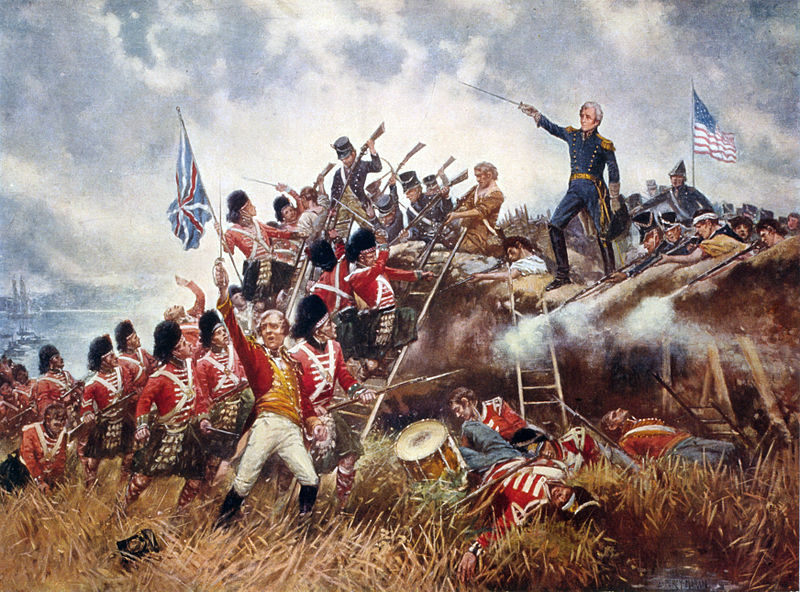
Today marks the bicentennial of the Battle of New Orleans, the last great salvo in the War of 1812, also known as our “forgotten conflict.” If you know anything about the conflict, it’s likely that it is some of the famous events that led up to the end of the war, such as the burning of the White House and the successful defense of Fort McHenry (which inspired “The Star-Spangled Banner”).

But our “forgotten conflict” left an indelible mark. The War of 1812 not only launched America, then a fledgling republic, onto the world stage as a force to be reckoned with, but also made famous our nation’s seventh president, then Major General Andrew Jackson, who led a modest group of volunteers to victory against a battle-tested British army in the Battle of New Orleans. The War of 1812 was fought to win greater respect for American rights at sea, which the British routinely violated in their search for victory against France in the Napoleonic Wars. But the European contest ended in 1814, and thereafter the British were able to concentrate on the United States and had the young republic on the ropes.

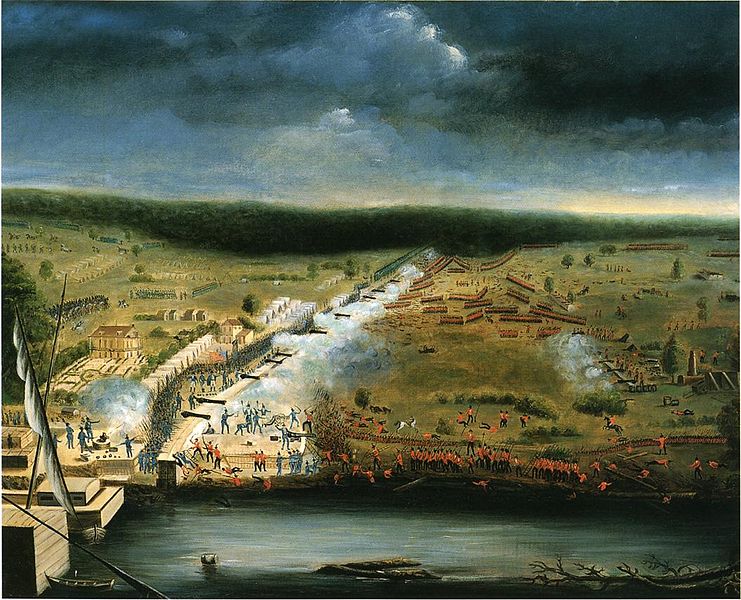
The aim of Britain’s Gulf Coast campaign was to occupy territory that might be used as a bargaining chip in the peace negotiations then underway at Ghent in modern-day Belgium. The main target was New Orleans, the largest city in the West and the outlet for virtually all farm commodities produced for export beyond the Appalachian Mountains. Confident that they could easily defeat the “dirty shirts,” as they called Jackson’s army of amateurs, the British were eager to bring matters to a head. But Jackson, who had an instinctive grasp of military strategy and tactics and an iron will, slowed the British down in three preliminary battles before they launched their main attack on Jan. 8, 1815.

At 6 a.m. on that cold and misty January morning, a Congreve rocket fired into the air south of New Orleans was the signal for some 5,000 British troops to advance against Jackson’s army, about the same size, behind a well-fortified line that was stretched from the Mississippi River in the west to an impenetrable cypress swamp in the east. The battle lasted less than 30 minutes, and the result changed America and stunned the world. By the time the smoke had cleared, the British had sustained 2,000 killed, wounded, missing or captured. Jackson’s own losses were only 71. This was the most lopsided defeat ever suffered by a British army. News of the battle spread like wildfire across the United States and immediately transformed the entire war into a glorious American victory.

For the rest of the century, many Americans celebrated Jan. 8 as much as July 4, and Jackson’s triumph quickly became encrusted in myth and legend. One myth held that the U.S. victory had produced a favorable peace settlement, although the peace treaty, which did not mention the maritime issues that had caused the war, was signed two weeks before, on Dec. 24, 1814. Later this notion was replaced by a more plausible (and persistent) myth that the battle was fought after the war was over. But this, too, was untrue because it took six weeks for the treaty to cross the Atlantic, and the war ended only after it was ratified by the United States on Feb. 16, some five weeks after Jackson’s victory.

Other myths have been equally persistent. Among these are the notion that the Kentucky rifle won the battle (it was mainly artillery); that Jean Lafitte and his pirates played a central role (an exaggeration based on a combination of the romantic appeal of pirates and a fake Lafitte diary that surfaced in the 1950s); that the British planned to sack the city if they won – known as the “beauty and booty” myth – (there is no credible evidence for this); and that the British would not have surrendered southern Louisiana if they had prevailed (again, no evidence). These myths have endured because they endow the victory with greater meaning, foster an appealing self-image and promote a notion of unconventional Yankee success that Americans still find attractive.

The real significance of the battle is not that it spared New Orleans or preserved Louisiana but that it shaped how Americans remembered the war. In celebrating Jackson’s victory, Americans have chosen to ignore that the peace treaty was silent on the neutral rights for which they were contending. They have also forgotten how close the young republic came to military defeat, economic collapse and national bankruptcy (the Treasury having defaulted on the national debt in 1814). Instead, Americans prefer to remember how Jackson’s ragtag frontier army that included free blacks as well as French and Spanish residents decisively defeated the conquerors of Napoleon and the Mistress of the Seas.

The victory made Jackson the hero of the age, catapulted him into the presidency and launched a buoyant postwar era that is still called the Age of Jackson. The victory boosted American self-confidence and gave added meaning to a war whose legacy was destined to be profound and lasting. The War of 1812 opened the door to territorial expansion, marked the birth of the American military establishment, shaped the political landscape until the Civil War and forged a national identity. “Don’t give up the ship” and “We have met the enemy and they are ours” entered the American lexicon. “The Star-Spangled Banner” became a popular tune that Congress made our national anthem in 1931. The war also produced an iconic ship, the USS Constitution (“Old Ironsides”), and gave the Kentucky rifle an inflated reputation as a war-winner and game-changer.

The War of 1812 may have seemed a small and inconclusive contest, and Jackson’s great victory may have had no impact on its course; but both the battle and the war played a central role in shaping the nation.

Check out the article at US News & World Report.

For a complete list of events commemorating the Battle of New Orleans Centennial, check out www.battleofneworleans2015.com

I'm fascinated by history, and by how much can be forgotten in such a relatively short period time. The details fade away and only legend remains. I always look forward to such an anniversary, for the opportunity to examine the specifics more closely.

For more information on the War of 1812 and the Battle of New Orleans, check out the following: