Thursday, July 12, 2007

New 7 Wonders of the World

The Great Wall of China

Jordanian site of Petra

Rio de Janeiro's Statue of Christ the Redeemer

Peru's Historic Sanctuary of Machu Picchu

Mexico's Mayan City of Chichen Itza

The Roman Colosseum

India's Taj Mahal

LISBON, Portugal — Monuments in three Latin American countries were named among the new seven wonders of the world Saturday, July 7, 2007.

Brazil's Statue of Christ Redeemer, Peru's Machu Picchu, and Mexico's Chichen Itza pyramid were chosen alongside the Great Wall of China, Jordan's Petra, the Colosseum in Rome and India's Taj Mahal.

The sites were selected according to a tally of around 100 million votes cast by people around the world over the Internet and by cell phone text messages, the nonprofit organization that conducted the poll said.

Among the places left out were the Acropolis in Athens, Greece; the Statues of Easter Island, Chile; Cambodia's Angkor; Turkey's Hagia Sophia; and Russia's Kremlin and St. Basil's Cathedral.

Those major attractions were on the shortlist of 21 before the announcement of the results at a ceremony in Lisbon, Portugal.

The Great Pyramids of Giza, the only surviving structures from the original seven wonders of the ancient world, kept their status in addition to the new seven.

The new architectural marvels were presented during a show which included appearances by American actress Hilary Swank, Indian actress Bipasha Basu, and British actor Ben Kingsley, as well as performances by Jennifer Lopez and Jose Carreras.

The campaign to pick the seven new wonders was begun in 1999 by Swiss adventurer Bernard Weber. His Switzerland-based foundation, called New7Wonders, received almost 200 nominations from around the world. The list of candidates was narrowed down to 21 by early last year. Voting took place over the past six years, but gathered pace only in recent months.

The organizers conceded there was no foolproof way to prevent people from voting more than once for their favorite. They claimed votes came in from every country in the world.

The United Nations Educational, Scientific and Cultural Organization, or UNESCO, keeps updating its own list of World Heritage Sites, which now totals 851 places.

However, Paris-based UNESCO distanced itself from the seven wonders ballot, saying it reflected only the opinion of those who voted.

Weber aims to encourage cultural diversity by supporting, preserving and restoring monuments, and inspire people to value their heritage.

His foundation said it would use 50 percent of net revenue from the project to fund restoration efforts worldwide. One of them is a mission to rebuild the giant Bamiyan Buddha statue in Afghanistan, blown up in 2000 by the Taliban regime.

Weber said he was starting a new campaign Sunday to choose the new seven natural wonders of the world.

"If you want to save something, you first have to truly appreciate it," he told the crowd.

The original list of seven architectural marvels was collated by a variety of observers of the ancient Mediterranean and the Middle East.

However, the Hanging Gardens of Babylon, the Statue of Zeus at Olympia, the Temple of Artemis at Ephesus, the Mausoleum of Halicarnassus, the Colossus of Rhodes and the Pharos lighthouse off Alexandria in Egypt have all vanished.

Check out the article at Fox News.

All beautiful and interesting places, to be sure... but my vote is for the New 21 Wonders of the World!

Be sure to check out the New 7 Wonders website.

Tuesday, July 10, 2007

Vacation in Charleston

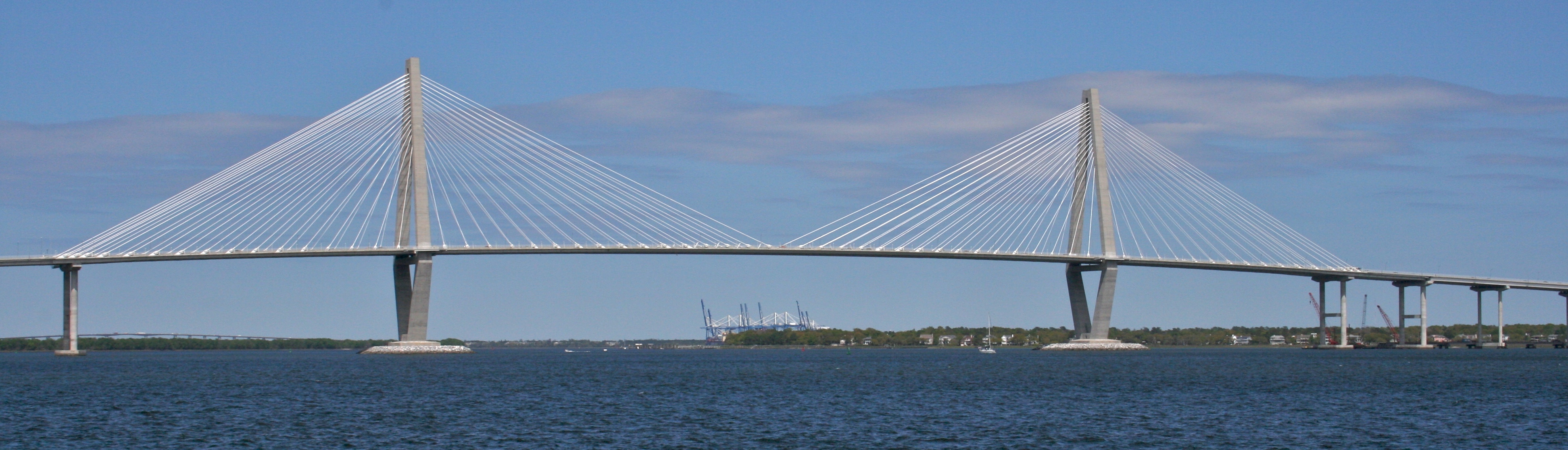
The Arthur Ravenal Bridge in Charleston, South Carolina

Waterfront Park in Charleston, South Carolina

Patriots Point and the USS Yorktown in Charleston, South Carolina

Fort Sumter in Charleston, South Carolina

The first C-17 Globemaster III squadron - based out of Charleston, South Carolina

Mansions on The Battery in Charleston, South Carolina

Cobblestone Streets in Charleston, South Carolina

Folly Beach Pier - Charleston, South Carolina

Folly Beach - Charleston, South Carolina

Morris Island Lighthouse in Charleston, South Carolina

Dawn at Folly Beach - Charleston, South Carolina

Charleston is a notable tourist destination, with streets lined with grand live oaks draped with Spanish moss. Along the waterfront in an area known as Rainbow Row are many beautiful and historic pastel-colored homes. The city is also an important port, boasting the second largest container seaport on the East Coast and the fourth largest container seaport in North America. It is also the second most productive port in the World behind Hong Kong. Charleston is becoming a prime location for technology jobs and corporations. In the city's downtown area, the medical district is experiencing rapid growth of biotechnology and medical research coupled with substantial expansions of hospital facilities at the Medical University of South Carolina and Roper Hospital. It is also home to the very prestigious all-girls school named Ashley Hall, which was founded in 1909 and the Porter-Gaud School, founded in 1867.

Hurricane Hugo hit Charleston in 1989, and though the worst damage was in nearby McClellanville, the storm damaged three-quarters of the homes in Charleston's historic district. The hurricane caused over $2.8 billion in damage.

In 1993, the world's first squadron of the significant C-17 Globemaster III aircraft was established at Charleston Air Force base.

In 2004, SPAWAR (US Navy Space and Naval Warfare Systems Command) became the largest employer in the Charleston metropolitan area. Until 2004, the Medical University of South Carolina was the largest employer.

Charleston is the home of a Consolidated Mail Outpatient Pharmacy (CMOP). It is part of an initiative by the Department of Veterans Affairs to provide mail order prescriptions to veterans using computerization at strategic locations throughout the United States.

Check out the article at Wikipedia.

We just returned from an AWESOME vacation in Charleston, South Carolina! This beautiful city boasts many attractions... there's something for everyone! I personally love the history surrounding the city... the first shots of the Civil War were fired here. You can tour the aircraft carrier, USS Yorktown or enjoy the peaceful waterfront at Battery Park. If you're in the mood for something a little more eerie, be sure to check out one of Charleston's many haunted tours. The fishing is GREAT and of course the beaches are perfect!

Now, where's my check from the Charleston CVB?

Wednesday, June 27, 2007

Voodoo Music Experience

New Orleans Voodoo Music Experience

New Orleans Voodoo Music Experience

New Orleans Voodoo Music Experience

NEW ORLEANS — Rage Against the Machine and the Smashing Pumpkins are among the acts set to headline this year's Voodoo Music Experience.

Other featured acts include Wilco, Ben Harper and the Innocent Criminals, Sinead O'Connor, Fall Out Boy, Mute Math, Plain White T's and The Black Crowes.

The three-day festival at City Park opens Oct. 26.

Some 90,000 fans attended last fall's festival, headlined by the Red Hot Chili Peppers and Duran Duran. That turnout prompted organizers to expand the event from two days to three. The festival also ran three days in 2003.

Steve Rehage, whose company, Rehage Entertainment Inc., produces the Voodoo Music Experience, said he's proud of the lineup. It's one he hopes "demands national attention and makes people think, `Wow, cool things still happen in New Orleans. Let's go.'"

Check out the article at Fox News.

New Orleans Voodoo Music Experience

Since its 1999 debut, the Voodoo Music Experience has called New Orleans home. As in previous years, the event will again feature the eclectic, reflecting the multitude of cultures that define this historic, beloved American city. Music fans from across the country and around the world come together to Experience the Ritual.

Music from world-renowned artists will be featured in three distinct performance areas--Le Ritual, Flambeau, and Le Carnival--each of which showcases a unique personality of New Orleans.

Le Ritual features two stages where music lovers gather annually to worship the music of the world's most renowned artists. The rites of more than 300 artist performances have included the reunited Iggy and the Stooges, Nine Inch Nails, Eminem's only festival performance, Tool, The White Stripes, Green Day, The Beastie Boys, Ben Harper, The Red Hot Chili Peppers and many more.

Flambeau is dedicated to celebrating and passing the torch of New Orleans' musical culture and celebrating its influences, Flambeau features two performance areas: The WWOZ/SOCO Stage and the Preservation Hall Tent, as well as a variety of full service local restaurants and an New Orleans Arts and Crafts area.

Le Carnival celebrates underground arts and the bohemian culture of New Orleans, ensuring a unique experience for festival attendees. It features extreme genres of performance art and music, and like carnival time in New Orleans, as well as every day in the bywater where freedom of expression is encouraged, and enjoyed.

Following its triumphant return with 93,000 attendees to its rightful City Park home last fall, New Orleans' signature fall music event, the ninth annual Voodoo Music Experience is set to take place over Halloween weekend (Friday, October 26, Saturday, October 27 and Sunday, October 28).

Check out the article at NOLA.com.

What an awesome lineup! This year's Voodoo Music Experience is going to be an outdoor music festival to remember!

There's something about music festivals in The Big Easy... once you've been to one, most concerts you attend after that will just seem mediocre.

Be sure to check out the Voodoo Music Experience website for lineups, photos, souvenirs and tickets!

Make your plans to head down to New Orleans this fall... it will be an experience of a lifetime!

Monday, June 25, 2007

Visions of Earth

Salt dug from the world's largest salt plain waits for transport to surrounding Andean villages - Bolivia

The Olindias jellyfish displays an extravagantly curled and colored armament of tentacles loaded with stinging cells

Morning glories roil over the Gulf of Carpentaria in Queensland, Australia

Comet McNaught as viewed from New Zealand

Reed Flute Cave reflections in China

A lava lake seethes within Nyiragongo volcano just ten miles from Goma, Congo

A Snowy Owl prepares to pounce - Quebec Province, Canada

Limestone pinnacles rise 300-plus feet in Bemaraha National Park, Madagascar

Each month, National Geographic magazine features breathtaking photographs in Visions of Earth. Browse through this view of the world through a photographer's eye.

Check out the feature at National Geographic.

Excellent photography! Of course, what else would you expect from National Geographic?

Be sure to check out National Geographic Magazine Photography AND National Geographic Photography for many more excellent photographs and desktop wallpapers!

Thursday, June 21, 2007

Summer Solstice over Stonehenge

Summer Solstice Sunrise at Stonehenge

The crowd gathers to witness the Summer Solstice Sunrise

Revelers await the Summer Solstice Sunrise

The famous and mysterious ancient monument known as Stonehenge

STONEHENGE, England — More than 20,000 people braved heavy rain and clouds of cannabis smoke to celebrate the summer solstice at Stonehenge.

The ancient monument rang to the sounds of drumming and a saxophone as the Sun rose unseen above the Heel Stone at 4:58 a.m.

Druids, pagans, punks and New Age travelers mingled with the merely curious, despite the unfortunate weather.It was the first gathering at Stonehenge since the reclassification of cannabis and police were concentrating their attention on those suspected of possession with intent to supply rather than just smoking it.

The ceremonies were led by the self-styled Druid leader King Arthur Pendragon, who lit a fire to mark the imminent arrival of dawn.

“The fire welcomes the Sun for the longest day of the year, part of the seasonal wheel which we as Druids and pagans celebrate,” he said. “At the end of the day, this living temple we call Stonehenge belongs to all of us. We all have a right to come here and celebrate the solstice.”

Despite clear skies throughout the night, a ring of low cloud threatened to blot out the spectacle of the Sun rising in line with the stones as dawn approached.

To a chorus of applause from the crowds, it finally appeared above the cloud at 6:15 a.m., a late but welcome appearance. Peter Carson, who manages Stonehenge on behalf of English Heritage, said: “It’s wonderful. We are delighted that people have been able to come here and enjoy the solstice in a safe and peaceful manner.”

Check out the article at Fox News.

I'm sure it is quite a spectacular sight to witness the summer solstice sunrise over Stonehenge... looks like everyone there is having a "groovy" time!

Wednesday, June 20, 2007

Japan changes name of Iwo Jima

Present-day aerial photograph of Iwo To, formerly Iwo Jima

WWII US Navy aerial photograph of Iwo Jima

WWII Battle Map of Iwo Jima

WWII US Navy bombing run on Iwo Jima

US Forces landing at Iwo Jima

Mt. Suribachi flag raising

National World War II Museum - New Orleans, Louisiana

TOKYO – Japan has changed the name of the Pacific island of Iwo Jima to the original name of Iwo To given by locals, who have become disenchanted with the popularization of its modern-day moniker by such movies as Clint Eastwood's recently released "Letters from Iwo Jima."

The new name in Japanese looks and means the same as Iwo Jima — or Sulfer Island — but sounds different, the Japanese Geographical Survey Institute said.

The institute announced the name change on Monday after discussing the issue with Japan's coast guard. An official map with the new name will be released Sept. 1.

Iwo Jima was the site of the World War II battle immortalized by the famous photograph by Joe Rosenthal of The Associated Press of Marines raising the American flag on the islet's Mount Suribachi.

Before the war, however, the volcanic island was known as Iwo To by the 1,000 or so civilians who lived there.

They were evacuated in 1944 as U.S. forces advanced across the Pacific. Some Japanese navy officers who moved in to fortify the island mistakenly called it Iwo Jima, and the name stuck. After the war, civilians weren't allowed to return and the island was put to exclusive military use by both the U.S. and Japan, cementing its identity.

Never satisfied that the name Iwo Jima took root, locals took action in March after the release of Eastwood's two films "Letters from Iwo Jima" and "Flags of Our Fathers" spotlighted the misnomer.

"Though we're happy for Iwo To, which has been forgotten by history, the islanders are extremely grieved every time they hear Iwo To referred to as Iwo Jima," the local Ogasawara newspaper reported at the time.

Ogasawara, the municipality that administers Iwo To and neighboring islands, responded by adopting a resolution making Iwo To the official reading. Residents and descendants of Iwo To evacuees petitioned the central government to follow suit.

"These people are now scattered nationwide and are not able to go back to Iwo To," said the survey institute's Mitsugu Aizawa. "These people have said that the place is originally called Iwo To and their claim lead to this revision."

Today the only inhabitants are about 400 Japanese soldiers.

The 1945 battle for Iwo Jima pitted some 100,000 U.S. troops against 22,000 Japanese deeply dug into a labyrinth of tunnels and trenches. Nearly 7,000 Americans were killed capturing the island, and fewer than 1,000 of the Japanese would survive.

The Americans occupied the island after the war, and returned it to Japanese jurisdiction in 1968. The U.S. Navy still uses an Iwo To airstrip to train pilots who operate from aircraft carriers.

Check out the article at Fox News.

I'm glad that this historical error has finally been rectified... I'm sure the history books won't be re-written, but I guess this is as good as it's going to get for the former residents of the island.

Clint Eastwood recently produced two excellent, historically accurate movies about WWII Iwo Jima, or should I say Iwo To.

Letters from Iwo Jima is told from the Japanese defenders' point of view, and gives amazing insight into the Japanese mindset of the day. The movie is entirely in Japanese, with English subtitles... but don't let that stop you, it is an excellent movie!

Flags of our Fathers is a true story revolving around the lives of the individuals who were depicted raising the American Flag in the famous photograph on Mt. Suribachi. Based on the book by the same title, the story examines how those six soldiers' lives were forever changed when they were immortalized in that photograph. They were called heroes, but they didn't think that of themselves. The comment made by John Bradley sums up their true feelings: "The heroes of Iwo Jima are the guys who didn't come back."

Thursday, June 14, 2007

Flag Day

The American Flag

The American Flag represents freedom and has been an enduring symbol of our Nation's ideals since the earliest days of our Nation. Wherever it flies, we are reminded of America's unity and in the great cause of liberty and justice for all.

Two hundred and thirty years ago, the Second Continental Congress officially made the Stars and Stripes the symbol of America. The Founders declared that the 13 stars gracing the original flag represented "a new constellation," just as America embodied new hope and new light for mankind. Today, our flag continues to convey the bold spirit of a proud and determined Nation.

Americans have long flown our flag as a sign of patriotism and gratitude for the blessings of liberty. We also pledge allegiance to the flag as an expression of loyalty to our country and to the belief in the American creed of freedom and justice. By displaying and showing respect for the flag, we honor the ideals upon which our democracy rests and show appreciation for the freedoms we enjoy today. Flying the flag can also be an expression of thanks for the men and women who have served and sacrificed in defense of our freedoms -- from the early patriots of the Continental Army to the courageous Americans in uniform who are defending those freedoms around the world today.

During Flag Day and National Flag Week, we honor Old Glory and reflect on the foundations of our freedom. As citizens of this great Nation, we are proud of our heritage, grateful for our liberty, and confident in our future.

Check out the Proclamation at The White House website.

Be sure to check out the Flag Day Feature at Fact Monster

Also check out The National Flag Day Foundation website.

Friday, June 08, 2007

Survivalism

Survivalism by Nine Inch Nails

Nine Inch Nails - Year Zero

Year Zero - The Flag of the Resistance

Grammy Award Winning Industrial Rock band Nine Inch Nails


Nine Inch Nails - Survivalism

I should have listened to her,
so hard to keep control.
We kept on eating but our
bloated bellies still not full.
She gave us all she had but
we went and took some more.
Can't seem to shut her legs our
mother nature is a whore.

I got my propaganda I got revisionism.
I got my violence in high def ultra-realism.
All a part of this great nation.
I got my fist I got my plan I got survivalism.

Hypnotic sound of sirens
echoing through the street.
The cocking of the rifles,
the marching of the feet.
You see your world on fire,
don't try to act surprised.
We did just what you told us.
Lost our faith along the way and found ourselves believing your lies.

I got my propaganda I got revisionism.
I got my violence in high def ultra-realism.
All a part of this great nation.
I got my fist I got my plan I got survivalism.

All bruised and broken bleeding,
she asks to take my hand.
I turn just keep on walking.
But you'd do the same thing in the circumstance I'm sure you understand.

I got my propaganda I got revisionism.
I got my violence in high def ultra-realism.
All a part of this great nation.
I got my fist I got my plan I got survivalism.

Check out the:

Survivalism is a kick-ass song from a unique concept album... Year Zero

The Concept: Year Zero takes place about fifteen years in the future. Things are not good. If you imagine a world where greed and power continue to run their likely course, you'll have an idea of the backdrop. The world has reached the breaking point - politically, spiritually and ecologically. Written from various perspectives of people in this world, Year Zero examines various viewpoints set against an impending moment of truth.

It seems that Trent Reznor has done more than create a concept album, he's created his own fictional reality! There are even plans for a Year Zero alternate reality game and film project! Many Year Zero Hints have been found hidden in the album artwork, concert t-shirts, and even USB keys placed in the bathrooms of concert venues, that lead fans to concept-related websites and phone numbers... including Another Version of the Truth.


Wikipedia defines a survivalist as a person who anticipates and prepares for a future disruption in local, regional or worldwide social or political order.

Survivalism is a commonly used term for the subculture or movement of people who make such preparations. Survivalists often prepare for this anticipated disruption by learning skills (e.g., emergency medical training, marksmanship), stockpiling food and water, or building structures that will help them to survive (e.g., underground shelter, rural compound). The specific preparations made by survivalists depend on the nature of the anticipated disruption, some of the most commonly anticipated being:

  • Natural disasters, such as tornadoes, hurricanes, earthquakes, blizzards, and severe thunderstorms.
  • A disaster brought about by the activities of mankind such as chemical spills, release of radioactive materials, war.
  • General collapse of society, resulting from the unavailability of electricity, fuel, food, and water.
  • Widespread chaos, or some other apocalyptic event.

Survivalism ranges from the paranoid extremist to the well-prepared average citizen. It is my opinion that if you're not a survivalist to some degree, you are a fool... everyone should at least have a store of food and water on-hand. I recommend more: camping supplies, first aid supplies, survival skills, weapons and ammo, a prepared place to hold out, and on-hand survival reference and training materials are all necessities. Of course, the list never really ends... the number one thing is: BE PREPARED!

Check out
Survival Blog

Wednesday, June 06, 2007

D-Day

Omaha Beach from Normandy Cemetery - present day

LST on D-Day in Normandy, France - June 6, 1944

Landing Supplies at Normandy, France - June, 1944

General Eisenhower speaks to paratroopers of the 101st Airborne - June 5, 1944

D-Day assault routes into Normandy, France

View of the American Cemetery from the Memorial - Normandy, France

National World War II Museum - New Orleans, Louisiana

D-Day - June 6, 1944

The Battle of Normandy was fought in 1944 between Nazi Germany in Western Europe and the invading Allied forces as part of the larger conflict of World War II. Operation Overlord was the codename for the Allied invasion of northwest Europe, which began on June 6, 1944, and ended on August 19, 1944, when the Allies crossed the River Seine. Over sixty years later, the Normandy Invasion still remains the largest seaborne invasion in history, involving almost three million troops crossing the English Channel from England to Normandy. Operation Neptune was the codename given to the initial assault phase of Operation Overlord; its mission, to gain a foothold on the continent, started on June 6, 1944 (most commonly known by the name D-Day) and ended on June 30, 1944.

The primary Allied formations that saw combat in Normandy came from the United States of America, United Kingdom and Canada. Substantial Free French and Polish forces also participated in the battle after the assault phase, and there were also contingents from Belgium, Czechoslovakia, Greece, the Netherlands, and Norway.

The Normandy invasion began with overnight parachute and glider landings, massive air attacks, naval bombardments, and an early morning amphibious phase began on June 6, 1944. The “D-Day” forces deployed from bases along the south coast of England, the most important of these being Portsmouth. The battle for Normandy continued for more than two months, with campaigns to establish, expand, and eventually break out of the Allied beachheads, and concluded with the liberation of Paris and the fall of the Falaise pocket in late August 1944.

The Battle of Normandy was described thus by Adolf Hitler: “In the East, the vastness of space will... permit a loss of territory... without suffering a mortal blow to Germany’s chance for survival. Not so in the West! If the enemy here succeeds… consequences of staggering proportions will follow within a short time.”

Check out the article at Wikipedia.

Be sure to visit the National World War II Museum in New Orleans, Louisiana for some exciting events going on today! Events include a paratrooper and artillery presentation, a scale model of Easy Green Sector - Omaha Beach, a complete Weapons of D-Day display, and the opportunity to meet Normandy Veterans. Sounds like a lot of fun... too bad I'm stuck at work!

If you are interested in accurate D-Day and WWII history, I highly recommend the following books by Stephen Ambrose. He has written other WWII books, but those four are by far the most notable and my favorites:

The HBO miniseries Band of Brothers, inspired by Stephen Ambrose's book by the same title, is a must-see for any WWII history buff. I have found the series to be one of the most historically accurate movies made on the topic... I highly recommend checking it out!

There are MANY movies made in the WWII setting, check out World War II on Film at www.worldwar-2.net and the Wikipedia List of WWII Films.

Tuesday, June 05, 2007

New Planet Bonanza!

Planet Gliese 581a

HD 69830 Planets

Twenty-eight new planets have been discovered outside the solar system in the past year, scientists announced yesterday.

The new discoveries raise the total number of exoplanets—worlds that circle other stars—to 236.

Many of the discoveries were published in scientific journals over the past year.

Monday's announcement at a meeting of the American Astronomical Society in Honolulu, Hawaii, was the first time the finds were presented together to the public.

Most of the new planets are probably huge balls of gas, more like Jupiter than Earth.

But scientists say the increasing rate at which they're finding new exoplanets makes it almost certain that the galaxy is swarming with smaller, rocky, and potentially habitable worlds that have so far eluded detection.

"We're finally now getting a sense that our solar system is not a rarity," said Geoff Marcy, who led the California and Carnegie Planet Search team that made many of the discoveries.

"There are indeed tens of billions of planetary systems out there, no doubt some of them rocky Earths, lukewarm, and suitable for life."

Marcy, an astrophysicist at the University of California, Berkeley, spoke to National Geographic News from the Keck Observatory atop Hawaii's Mauna Kea, where many of the new exoplanets were first spotted.

Advanced Wobbles

Because exoplanets are too far away to be seen directly, the 28 new planets were discovered by looking for the so-called Doppler wobble among stars.

This technique is based on the idea that if an unseen planet orbits a star, its gravitational pull causes a slight "wobble" in the light wavelengths coming from that star.

In addition to revealing the 28 new planets, advances in this technique recently allowed a postdoctoral astronomer at the University of Geneva in Switzerland to pin down the size of a large exoplanet that was discovered almost two years ago by Marcy's team.

Finding Other "Earths"

Based on data gathered so far, of the more than 200 billion stars in the Milky Way galaxy, at least 10 percent are thought to have planetary systems, UC Berkeley's Marcy said.

And at least 30 percent of all stars that are known to host planets have more than one, scientists say.

"Many of them remind us of our home solar system," Marcy said.

"We're finding a lot of cases in which the larger planets—the Jupiters and the Saturns—orbit further from the star than the smaller planets, and that is in fact the case for our solar system," he said.

Among this year's exoplanet finds are at least four new multiple-planet star systems.

Astronomers are finding that stars harboring the most planets are those that are rich in heavier elements, such as silicon, oxygen, iron, and nickel.

This may give researchers a clue as to where to look for possible habitable worlds.

"It's those richer stars that we're focusing our attention on, because those heavy elements are the building blocks of rocky planets like our Earth," Marcy said.

After all, he said, "it's not just the planets that require the heavy elements, it's the organisms themselves, should any exist."

Check out the article at National Geographic News.

There are bound to be TONS of potential new homes for us... we just have to know where to look.

Be sure to check out my previous post on the topic: A New Home?